
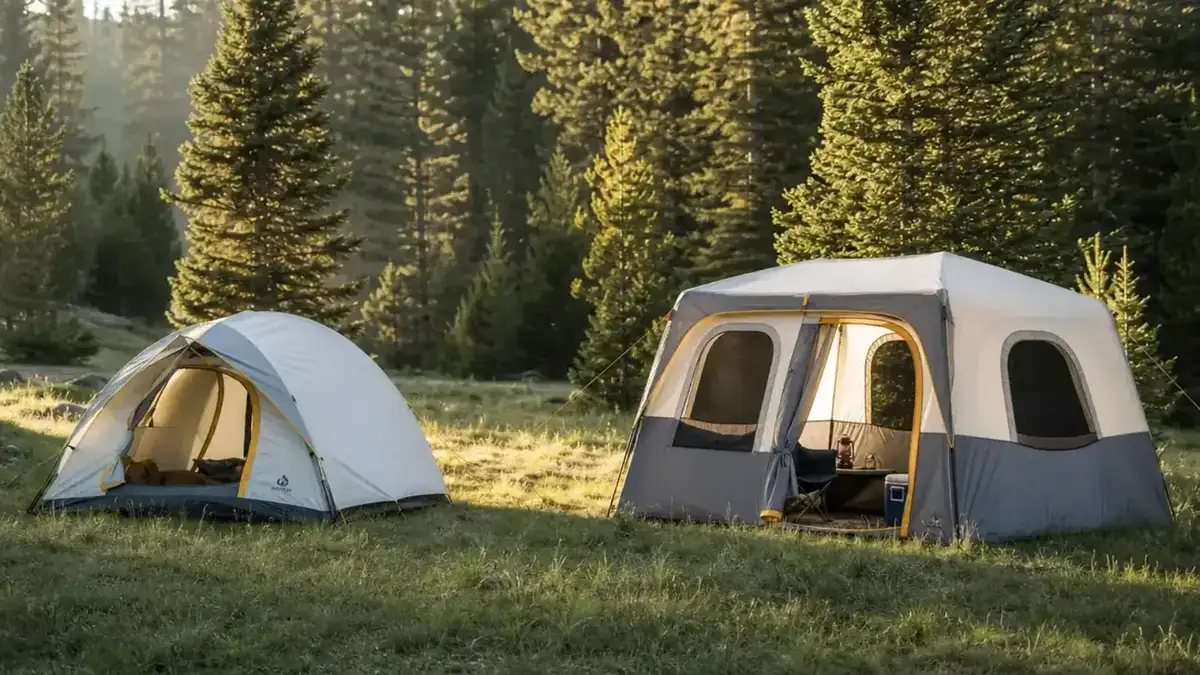
If you have six people sleeping in the same tent, you are already past the point where most gear advice gets useful. Both the Coleman 6-Person Instant Tent and the CORE 6-Person Cabin Tent cost around the same amount, carry similar floor space numbers on the box, and get strong reviews on Amazon. The choice between them is not about which one is good. It is about which one fits how you actually camp. I have pitched both at designated campgrounds in Georgia and Tennessee over the last two summers, and the differences that matter are not the ones that show up in the bullet points.
Short answer: the Coleman Instant Tent is the better pick for most car campers. Setup time alone is a real differentiator when you are pulling into a campsite at 7 PM with tired kids. If you want the extra 20 square feet of floor space and do not mind a longer pitch time, the CORE cabin makes sense. But for the majority of families camping two to ten times per year, the Coleman wins on the combination of setup speed, livable peak height, and a track record that spans millions of units.
| Coleman Instant Tent | CORE Cabin Tent | |
|---|---|---|
| Floor Area | 100 sq ft (10 x 10 ft) | 120 sq ft (14 x 10 ft) |
| Peak Height | 6 ft 2 in | 6 ft |
| Setup Time | 60 seconds (pre-attached poles) | 10-15 minutes (traditional pole sleeves) |
| Packed Weight | 20.9 lbs | 24.5 lbs |
| Packed Size | 26 x 9 x 9 in (bag) | 30 x 12 x 12 in (bag) |
| Rain Fly Coverage | Full fly included, welded seams | Full fly, taped seams |
| Seasons Rated | 3-season | 3-season |
| Price Tier | Mid-range | Mid-range |
| Warranty | 1-year limited | 1-year limited |
Where the Coleman Instant Tent Wins
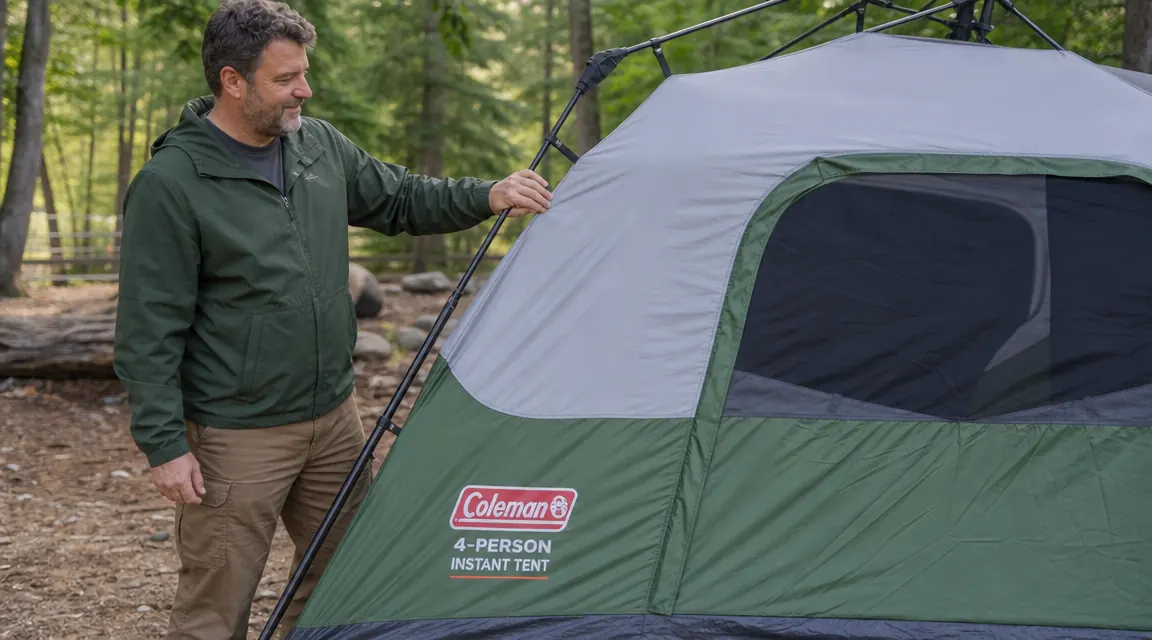
The one-minute setup claim is real. I have timed it with my phone: 58 seconds from pulling the tent out of the bag to standing upright, not counting stakes. The poles are permanently attached to the tent body in a hinged frame. You unfold the whole assembly like an accordion, walk it out, and push the corners into the ground. When you have three kids unloading sleeping bags and a partner trying to find the lantern, getting the tent up in under a minute instead of fifteen matters more than it sounds. The CORE requires threading poles through fabric sleeves and hub connectors, which is not complicated but does take both hands and a degree of coordination that a tired adult does not always have at sundown.
The Coleman also packs smaller. At 26 x 9 x 9 inches, the bag fits flat across the floor of a Toyota 4Runner cargo area alongside coolers and duffel bags without creating a Tetris puzzle. The CORE's 30 x 12 x 12 inch packed bag is not enormous, but it eats one more container's worth of trunk space. Over a summer of trips where you are loading and unloading in a parking lot, that size difference matters. Peak height is another edge: 6 feet 2 inches lets a six-foot person stand fully upright in the center and move around without that slight duck that turns a tent into a crouch contest. The CORE's 6-foot peak means anyone over 5'11" spends a lot of time bending at the neck.
Done comparing? The Coleman is in stock right now and ships in time for the weekend.
Over 23,000 verified reviews. Pre-attached poles, full rain fly, and a setup time that is actually 60 seconds.
Amazon Check Today's Price on Amazon →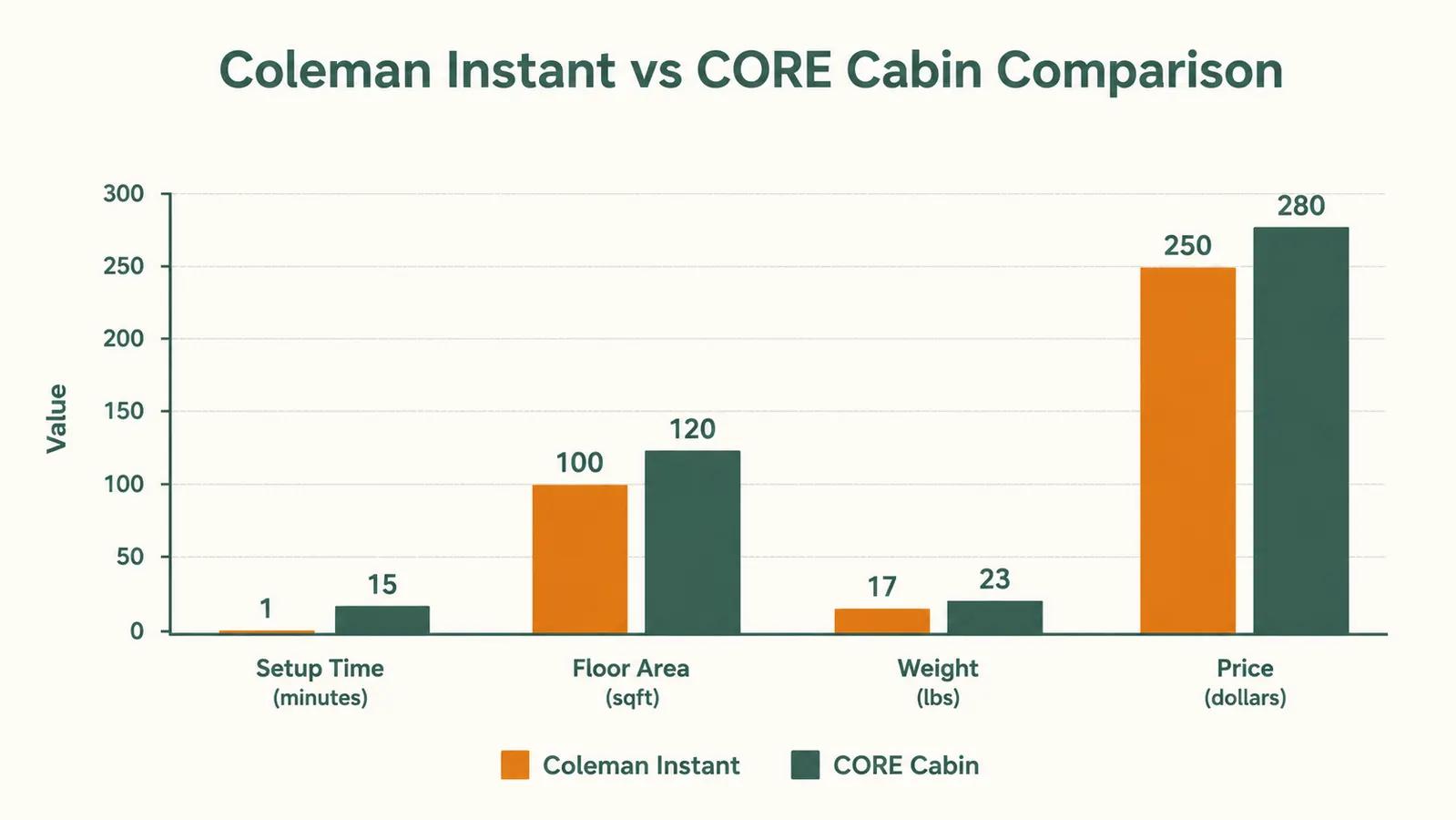
Where the CORE Cabin Tent Wins
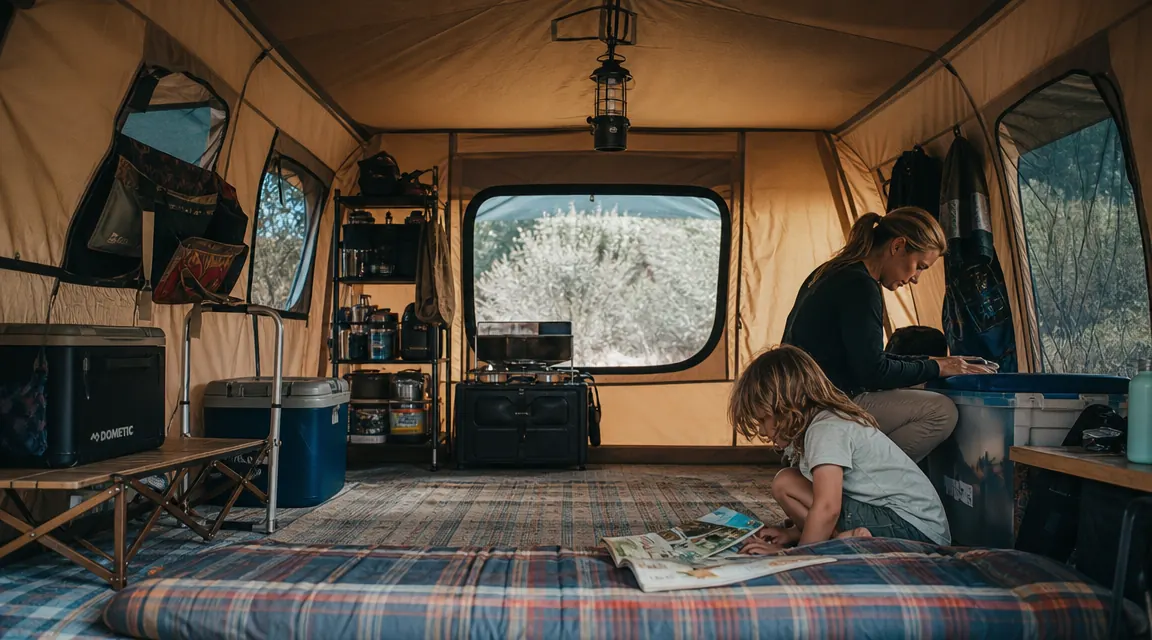
If you need every square foot of floor space you can get, the CORE delivers 120 square feet versus 100 in the Coleman. That 20-square-foot difference means you can fit two queen-size air mattresses side by side with a few inches to spare, whereas in the Coleman you are placing mattresses at a slight angle or accepting that one person gets the less-than-flat corner. The CORE also has near-vertical walls from about 18 inches off the floor, which is the cabin geometry that makes dressing, organizing, and living in the tent feel less like a crawl space. The Coleman's walls angle inward noticeably from about two feet up, so while the peak is taller, the usable volume at human-body height is closer between the two tents than the raw floor numbers suggest.
The CORE also offers better ventilation architecture. Its mesh ceiling and multiple low-and-high vents create more airflow in still, humid conditions than the Coleman's design, which relies more heavily on the door and window panels. If you camp primarily in the Southeast in June through August, the CORE's ventilation setup runs measurably cooler on still nights. It is also worth noting that the CORE's pole system, while slower to assemble, creates a more rigid structure that holds its shape better in lateral wind. The Coleman's instant-frame design can flex and sag at the corners in 30-plus mph gusts in ways the CORE does not.

Rain Performance: What Held Up and What Did Not
I rode out a two-hour thunderstorm in the Coleman at a Georgia state park in August 2024, and I stayed dry. The welded floor seams and full-coverage rain fly with a six-inch overhang kept water out of the interior completely. What did get wet: the small vestibule area inside the door on the windward side, where rain was driving almost horizontally. That was a setup error, not a tent defect. I staked out the fly too tight and eliminated the gap between fly and door panel. Lesson: leave slack in the fly.
The one failure mode I have heard about repeatedly from other Coleman Instant Tent owners is the corner clips where the poles connect to the tent body. On units that see a lot of setup cycles, the plastic clips can crack after two to three seasons of use. This is not an immediate problem, but if you are camping 15-plus times per year, budget for clip replacement around year three. Coleman sells replacement parts and the repair is straightforward.
Getting the tent up in under a minute instead of fifteen matters more than it sounds. When you have three kids unloading sleeping bags and a partner trying to find the lantern, setup time is not a feature. It is the whole experience.
Who Should Buy Which
Buy the Coleman Instant Tent if you camp six to fifteen times per year, arrive at campsites in the evening, and want a tent you can hand to someone who has never set up a tent before. The setup requires no instructions once you have done it twice. It also makes sense if trunk space is tight, if you are camping with kids who need the site functional before their patience runs out, or if you prioritize headroom over floor square footage.
Consider the CORE Cabin Tent if you are camping two to four times per year and have the time to set up properly, if you are sleeping with two queen air mattresses that need the extra width, or if your main camps are in hot, humid, low-wind conditions where ventilation beats everything else. The CORE is also worth a look if you regularly camp in open sites exposed to wind, where its more rigid pole structure will be noticeably more stable. Just know that if you pull in after dark and need the tent up in five minutes, you will be doing it by headlamp with a set of poles and sleeves, which is doable but slower.
One more thing: the Coleman has 23,866 Amazon reviews and a 4.3-star average, which means the failure modes are well-documented and the common repair questions are answered in the Q&A section. When something goes wrong at a campsite, having a product with a large owner community is an underrated advantage. The CORE is a solid tent, but it is the less-owned option, so you are more on your own when the poles do not quite fit the way you expect on trip one.
The Coleman Instant Tent is the right call for most families. Here is where to get it at today's price.
Pre-attached poles, 6'2" peak height, welded floor seams, full rain fly. Ships fast from Amazon.
Amazon Check Today's Price on Amazon →