
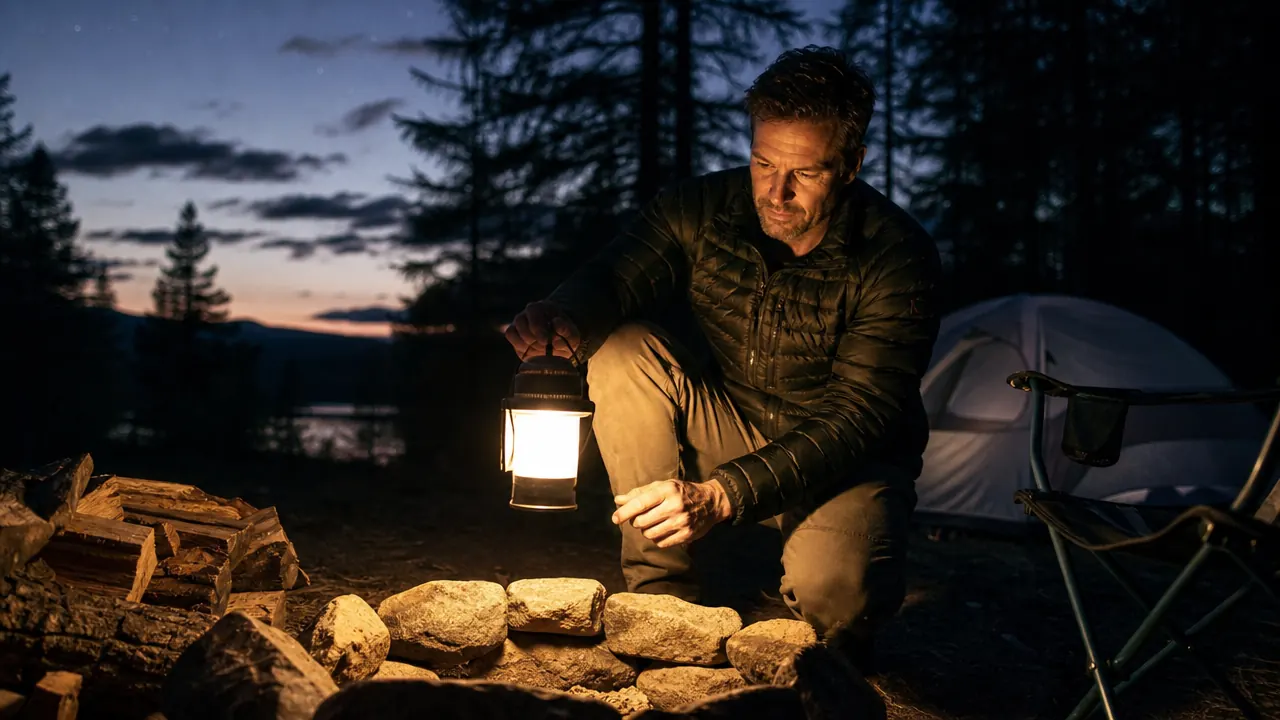
I have shown up to a campsite after dark with a lantern that chewed through four fresh AAs in about six hours. That is fine on night one. By night three of a four-night trip, I am either buying batteries at a gas station three miles down the highway or reading by headlamp while everyone else goes to sleep. That is the real argument for switching to a rechargeable camping lantern, and it only takes one bad trip to make it obvious.
I have been running the Lepro 1000LM LED camping lantern for two seasons now. It has a 4,400mAh built-in battery, charges via USB-C, and puts out up to 1,000 lumens on its highest setting. Below are ten specific reasons why I would not go back to a battery-powered model.
Stop packing backup batteries. The Lepro charges from any USB-C source before you leave the driveway.
4.6 stars across 33,000+ reviews. Four light modes, IPX4 waterproofing, and a 4,400mAh battery that runs all night on medium. Budget-friendly.
Amazon Check Today's Price on Amazon →No batteries to buy, pack, or dispose of
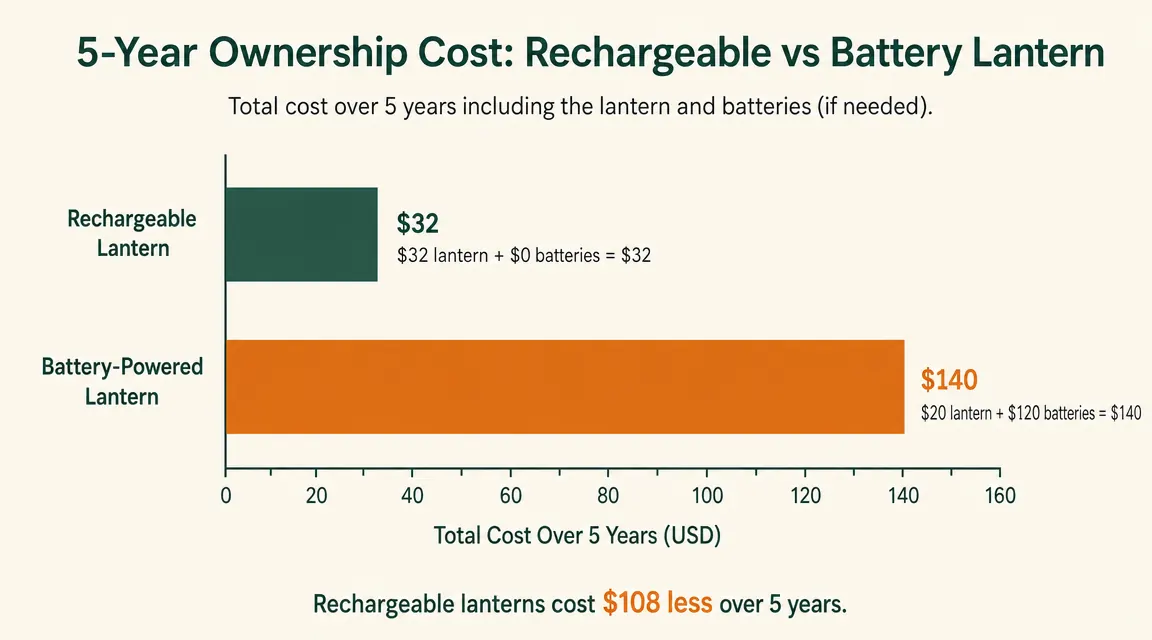
A 4-pack of AA batteries runs at typical camping supply store pricing. My old battery lantern used four AAs and lasted roughly six hours on medium. A three-night trip meant at least one fresh swap, more if the kids were up late. The Lepro charges from the same USB-C cable I use for my phone. I top it off at home the night before, and it is done. Over 20 trips, that is significant battery cost savings I did not spend.
Predictable runtime instead of a guessing game
Battery lanterns do not die cleanly. They dim slowly over two hours, then drop sharply around hour five. You never know exactly how much life is left. The Lepro has four modes: 1,000LM high (about 6 hours), 500LM medium (around 14 hours), 200LM low (roughly 30 hours), and a red SOS flash. Pick medium for camp chores and you will comfortably cover two nights of use between charges. That is a number you can actually plan around.
Charges from a power bank, solar panel, or car port
USB-C means the Lepro is compatible with every common charging source at a campsite: a 20,000mAh power bank, a 20W folding solar panel, a 12V car charger. If you are already carrying a power bank for phones and headlamps, the lantern just joins the queue. No proprietary charging cradles, no AA-compatible batteries that are hard to find when you run out at a rural campground.
1,000 lumens is a different category of bright
Most battery-powered lanterns top out at 200 to 300 lumens. The Lepro hits 1,000LM on high. That is enough to light a 10-by-14-foot tent footprint and still read without straining. I use it on medium most of the time, which is still double what my old AA lantern produced at full power. For cooking, card games, or finding gear in the dark at the edge of the site, the extra lumens matter.
IPX4 rating handles rain without panic
IPX4 means it can take water splashed from any direction. That covers driving rain, a kid knocking it into a puddle, or condensation dripping off a tarp. My previous battery lantern had no weatherproofing listed on the box. It fogged up internally on a damp night and never worked quite right after that. The Lepro has run through two wet weekends without issue.
The collapsible body actually stores flat
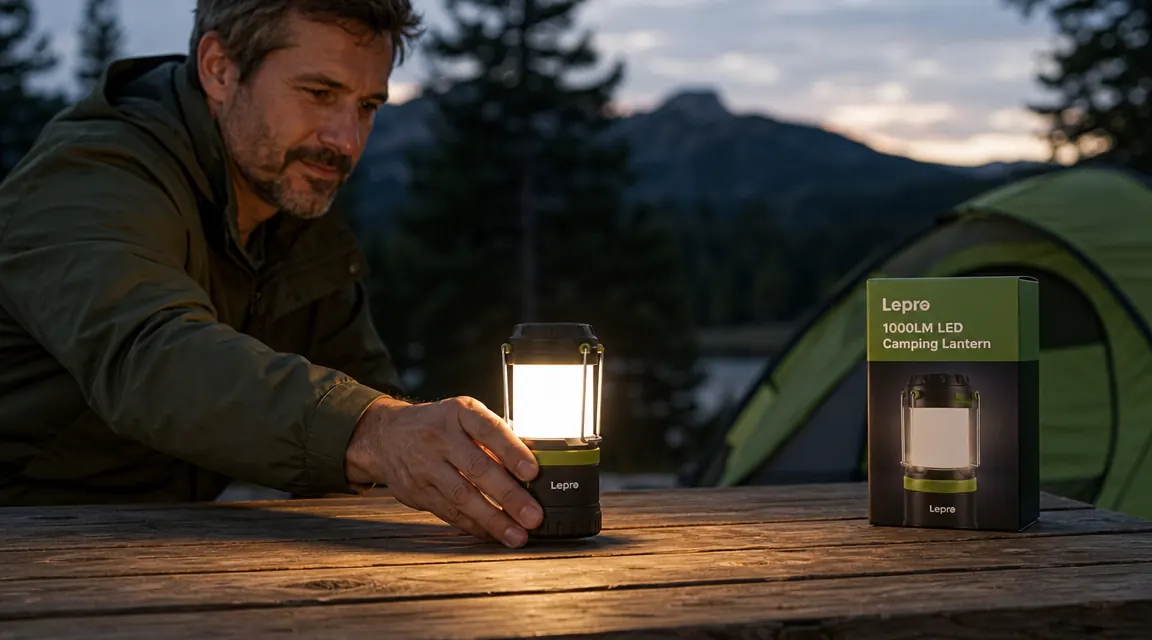
The Lepro collapses down from about 7 inches tall to roughly 3.5 inches. That is not a huge size difference, but it matters when you are packing a storage bin with a tent, sleeping bags, and a stove. The collapsed profile fits in gaps that a fixed-body lantern would not. The frosted diffuser panel also pops back out firmly and locks without play. I have not had it collapse mid-use.
The top hook means hands-free positioning
There is a metal loop at the top of the Lepro that handles about 3 lbs of hanging weight without bending. I clip it to the center hook inside my tent for ambient light, hang it from a rope strung between two trees for the cooking area, or set it on a table with the handle as a tilt stand. Battery lanterns at this price point usually have a plastic handle that works only as a carry grip. The hook adds real versatility.
A red light mode that does not kill your night vision
The fourth mode on the Lepro is a red SOS flash. I use it on trips where I want to keep the perimeter visible to vehicles without blasting white light at people trying to sleep. Red wavelengths also preserve night-adapted vision better than white, which matters if you are walking to the bathroom at 2am and want to actually see the trail when you get back. This is not a feature most battery-powered models at this price include.
The 4,400mAh battery doubles as a phone emergency charger
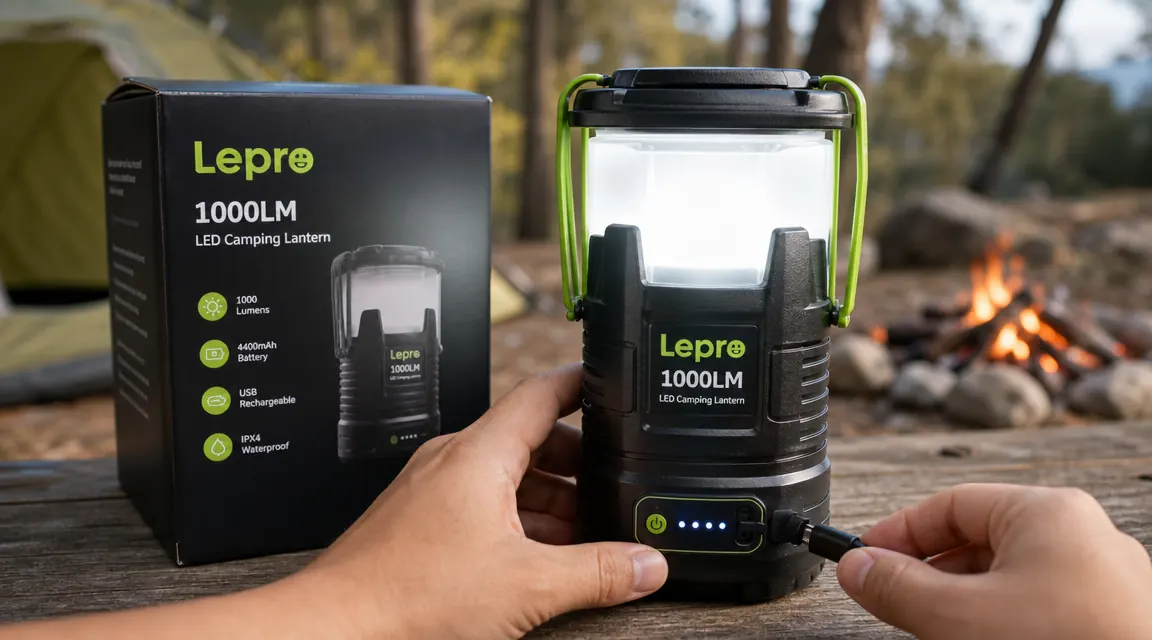
The Lepro has a USB-A output port on the bottom alongside the USB-C input. In a pinch, it will charge a phone from 0 to about 60 percent. I have used it twice when my power bank was depleted and I needed to send a message before losing signal. It is not a dedicated power bank, so do not count on it as your primary charging source, but having the option at no extra weight is genuinely useful.
33,000 reviews at 4.6 stars is not an accident
When a camping product crosses 30,000 reviews and holds a 4.6-star average, it means a lot of people have used it in conditions that were not ideal, and most of them came back satisfied. The Lepro's most common complaint in the reviews is that the charging indicator light is a little dim in direct sunlight, which is accurate but not a deal-breaker. For full notes on real-world durability, rain tests, and the one mode I never actually use, see my full Lepro camping lantern review. And if you want to build out your whole campsite lighting setup around a rechargeable system, the campsite lighting guide walks through placement and power bank pairing.
What I Would Skip
If you camp once a year for two nights, the battery math probably does not bother you enough to justify the switch. A cheap AA lantern from a big-box store will survive that use case. The rechargeable advantage compounds over repeated trips. If you are out three or more weekends a season, the Lepro pays for itself in batteries you did not buy by the end of summer.
Also worth noting: the Lepro is not rated for submersion. IPX4 is splash and rain protection, not dunking. If your campsite regularly involves water crossings or kayak trips where gear gets fully submerged, you need a lantern with an IPX7 or higher rating. For everything else, IPX4 is plenty.
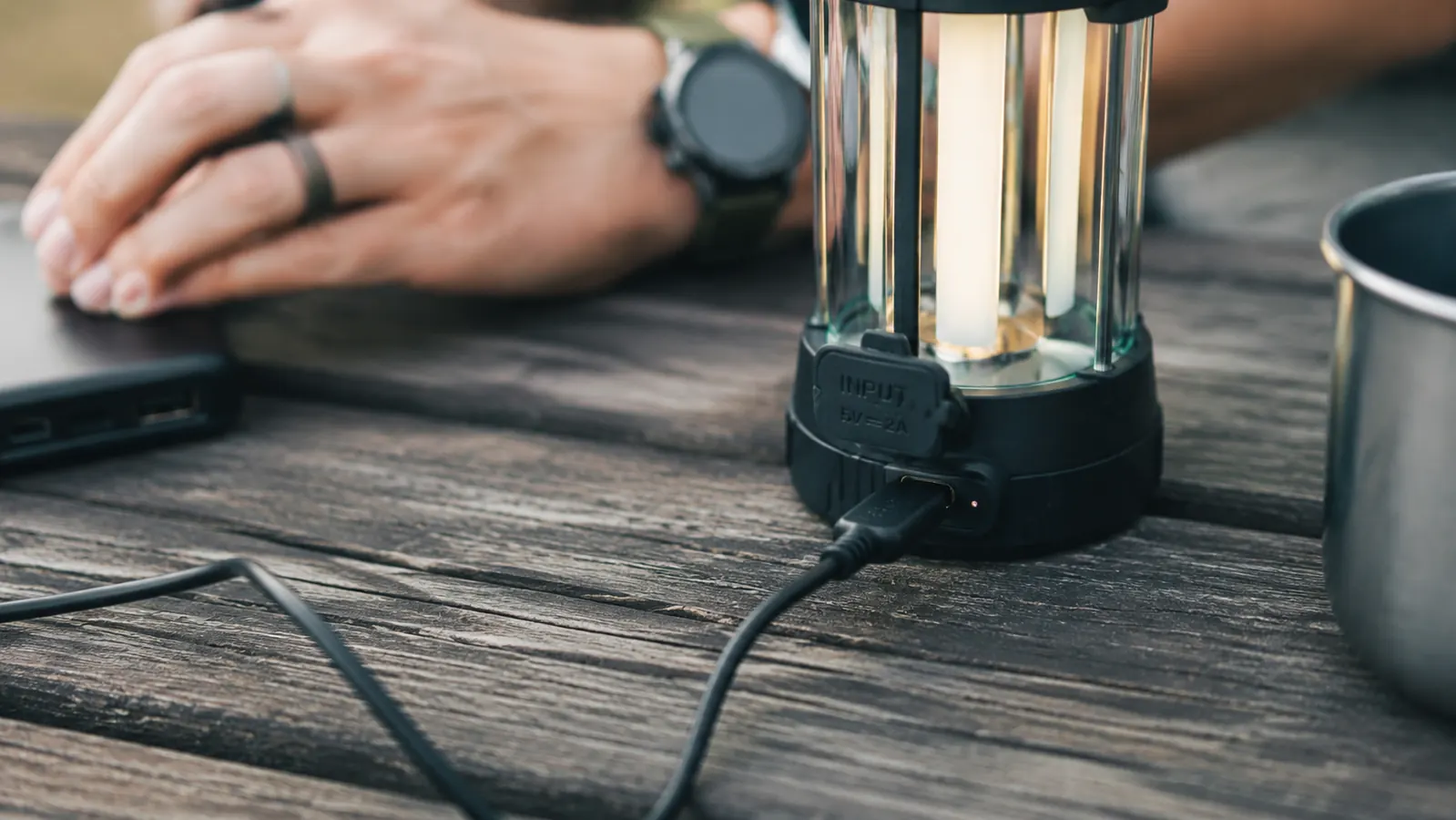
By the end of one summer, I had stopped thinking about lantern batteries entirely. That is the whole point.
The Lepro LED lantern is one of the most-reviewed camping lights on Amazon for a reason. Check today's price before your next trip.
1,000 lumens, four modes, USB-C charging, 4,400mAh battery that also charges your phone. 4.6 stars, 33,000+ reviews, budget-friendly.
Amazon Check Today's Price on Amazon →