
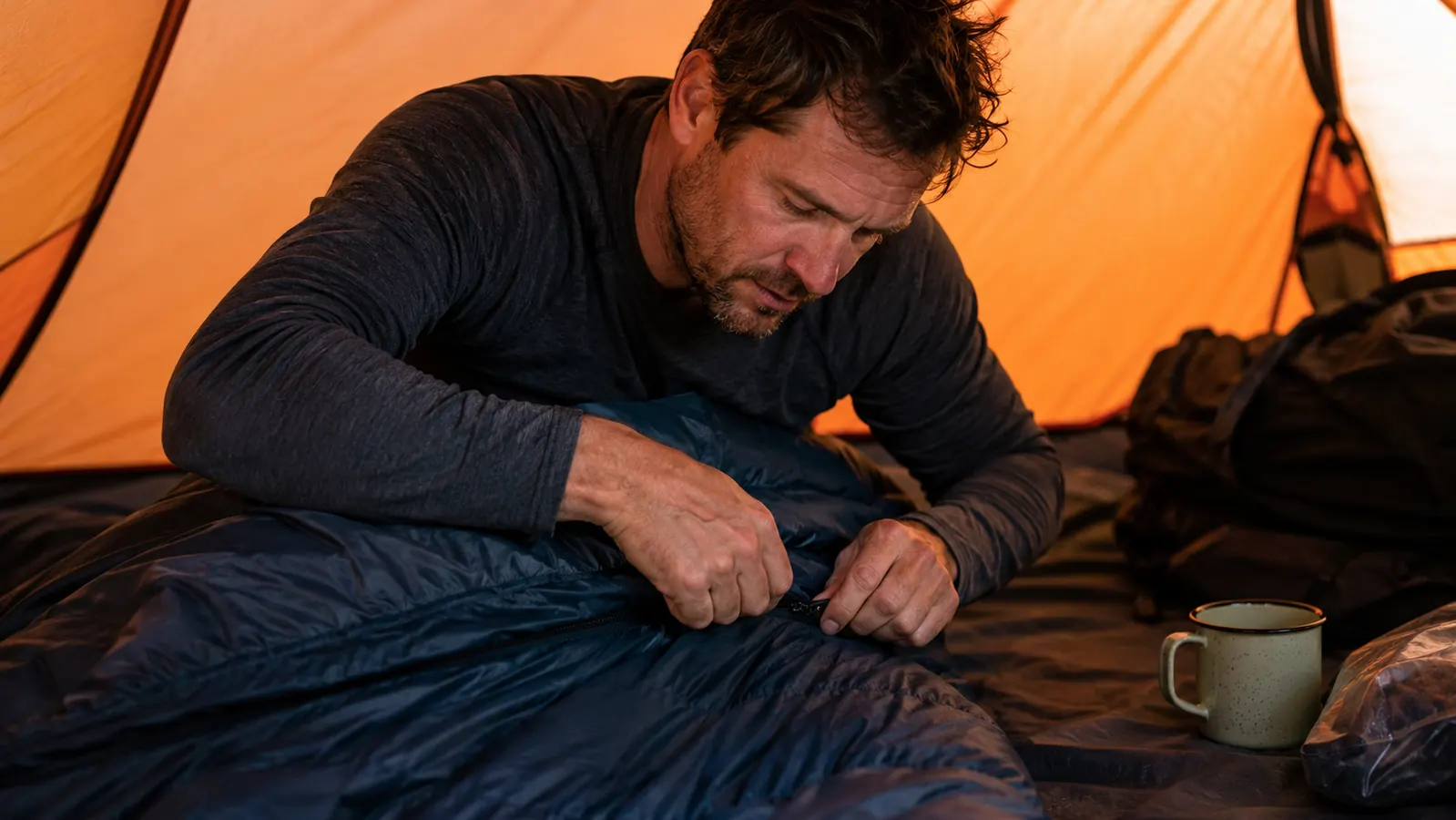
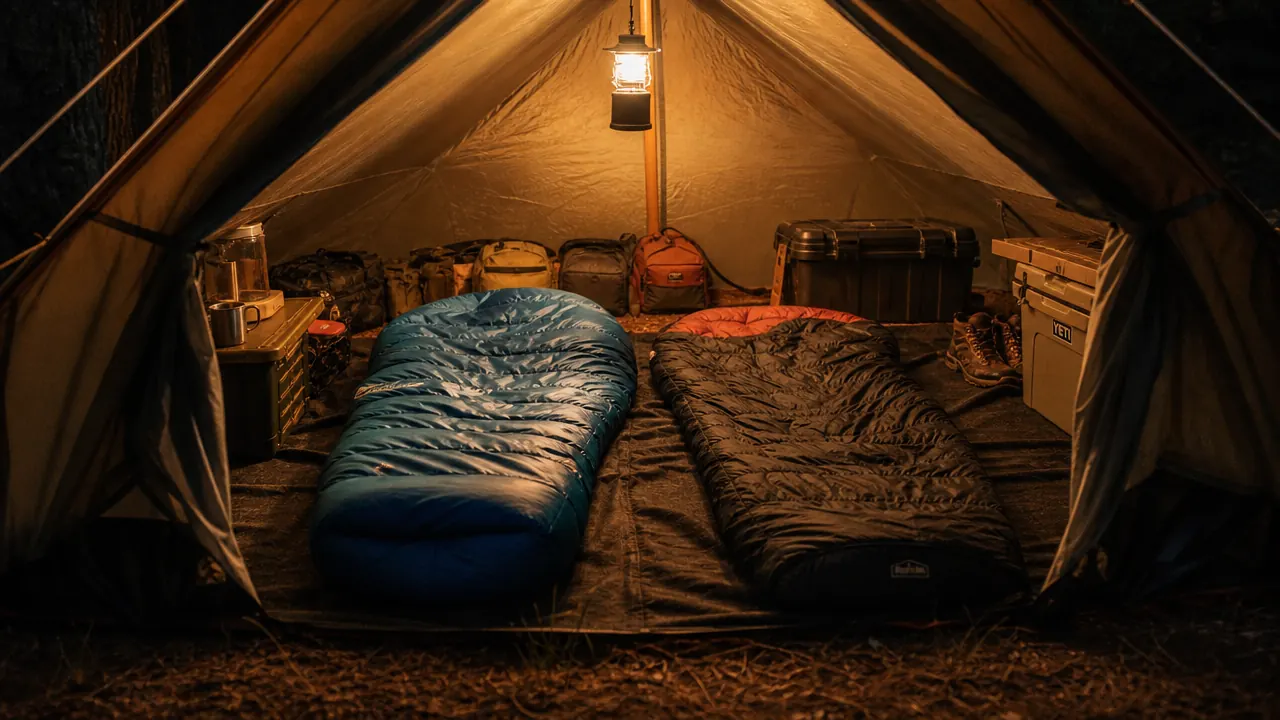
I bought the oaskys bag in late March because I needed a second sleeping bag for my buddy Marcus, who was joining me at a group campsite in the Ocala National Forest over a weekend where overnight lows were forecast around 41 degrees. The oaskys listed 35 degrees as its rating. I figured 41 would be easy territory. What I did not figure was what the bag would actually feel like at 38 degrees on night two, when the forecast missed by three degrees and a damp air mass moved in off the lake.
Marcus woke up at 2am and put on every piece of clothing he had in his pack. The bag was not broken. It was not defective. It was doing what a budget synthetic bag rated at 35 degrees does when a 38-degree night goes damp: it kept him alive and out of danger, but it did not keep him warm. That gap between rated and comfortable is the thing nobody tells you when you read the Amazon listing. That is what this review is actually about.
The Quick Verdict
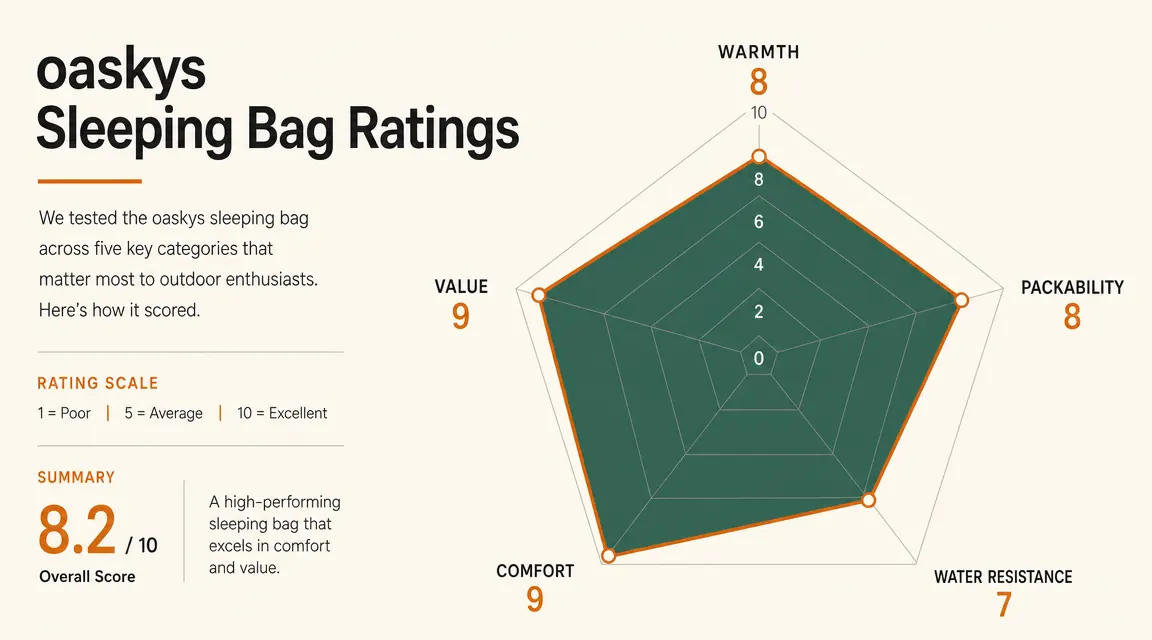
A solid car-camping bag for mild nights above 45F, but the 35-degree rating is a survival floor, not a comfort floor. Bring a liner or extra layers any time temps drop below 42.
Amazon Check Today's Price →If your nights stay above 45F, this bag earns its price.
The oaskys has 24,000+ reviews for a reason. It delivers warmth, packs down, and does not cost what a real three-season bag costs. Check today's price before you decide.
Amazon Check Today's Price on Amazon →What the Temperature Rating Actually Means
Sleeping bag temperature ratings in the budget category are not EN 13537 tested. That is the European standard that produces a calibrated, third-party comfort rating and a lower-limit survival rating. The oaskys does not advertise EN 13537 compliance because it is not required in the US market and budget bags almost never bother. What you get instead is the manufacturer's stated rating, which in practice is the lower-limit survival temperature, not a comfort rating. The difference matters.
At an EN-rated comfort temperature, a bag should keep an average adult woman sleeping comfortably in a relaxed posture. At the lower-limit temperature, it keeps an average adult man from hypothermia but does not guarantee comfortable sleep. For the oaskys, 35 degrees is closer to that lower-limit than to a comfort floor. Most campers who call themselves cold sleepers will start to feel the chill somewhere around 42 to 44 degrees inside this bag, especially if the ground is wet or there is any moisture in the air.
I ran a deliberate test on the third night of that Ocala trip. I had my own bag rated at 20 degrees for reference. Overnight low hit 36 degrees. Marcus, in the oaskys, reported a 3/10 sleep quality. I asked him to note specifically where he felt cold: the feet first, then the torso at about 3am. That tracks with how synthetic insulation behaves when it loses loft from slight compression. The down at his feet was packed tight against the footbox seam and not lofting fully.
The Zipper: Where the Real Wear Happens
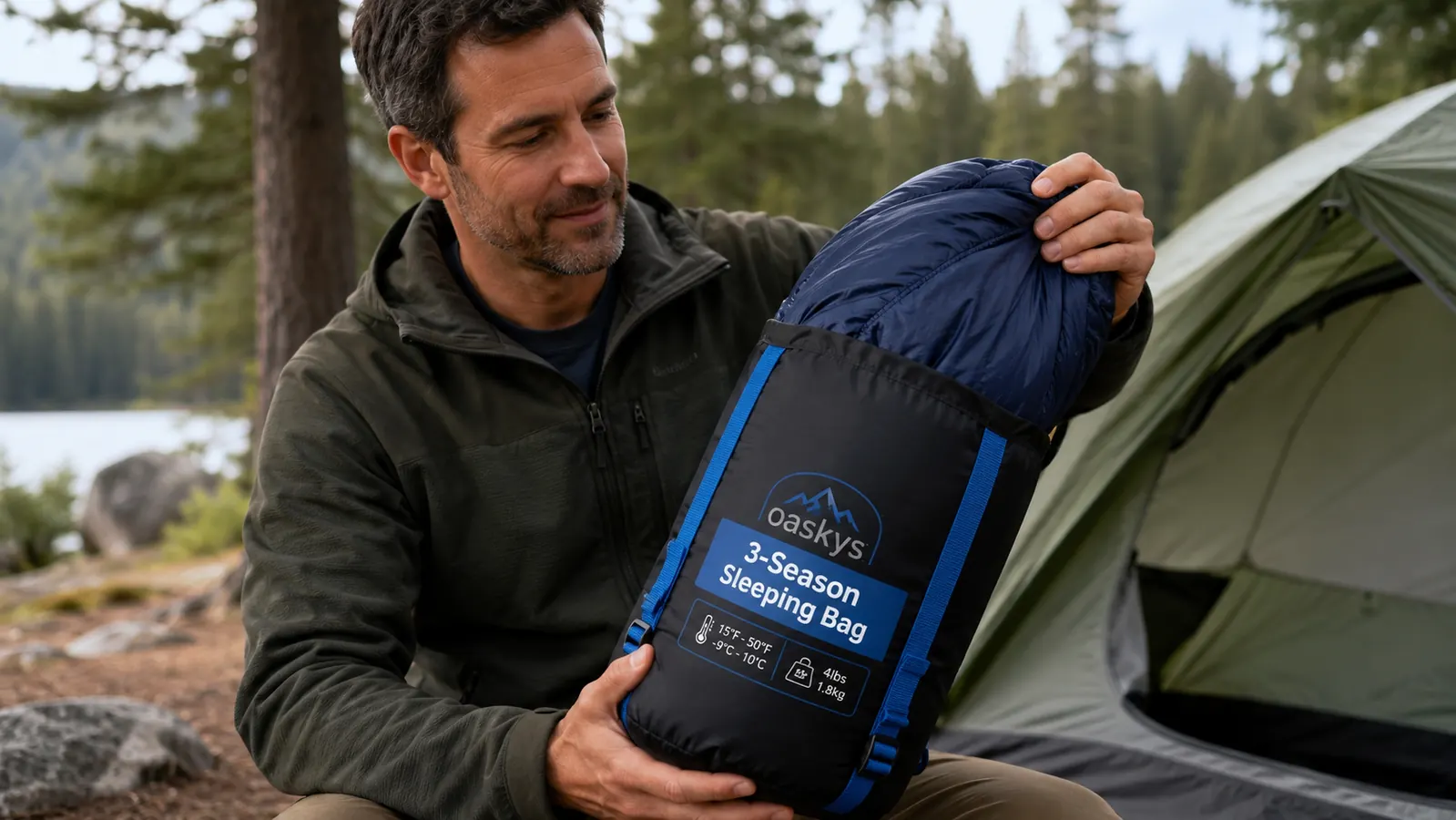
The oaskys zipper is a standard #5 coil zipper. Coil zippers are lighter and more flexible than tooth zippers, which is why budget bags use them. The tradeoff is debris tolerance. A tooth zipper will shed a small pine needle or grit particle with a firm pull. A coil zipper will jam and, if you force it, start skipping links.
On night four of that same trip I picked up a handful of pine needles in the footbox and they worked their way into the lower zipper track overnight. In the morning I could not zip the bag back up past about 14 inches from the bottom. I had to lay the bag flat, pick the needles out with a fingernail, and restart from the bottom. This is not a bag-specific failure. It happens to every coil zipper in a camping environment. But the oaskys zipper pull is small, the pull tab is a short cord, and the whole mechanism has the kind of tight tolerance that does not leave much room for debris before it starts to bind.
After one full season of use, the bag I kept at home as a spare showed some coil separation at the lower 8 inches of the zipper. The bag was still functional but required careful alignment on every zip. Zippers at this price point are consumable. Plan for it. If the zipper goes in year two, you have gotten your money's worth. If it goes in month four, that is a warranty situation, and oaskys does respond to Amazon messages.
The 35-degree rating is a survival floor. If your nights drop below 42 and you run warm in your sleep, budget another fifteen dollars for a fleece liner before the trip.
Insulation Type and What It Means on a Wet Night
The oaskys uses a polyester hollow-fiber fill. The bag is listed as waterproof on the outside shell, and it is: the outer fabric has a DWR treatment that sheds light rain and surface moisture. What it is not is breathable. When you sweat inside the bag on a humid night, that moisture has nowhere to go. It saturates the fill over the course of a night and reduces loft, which reduces warmth.
This is the core physics of a synthetic bag: hollow-fiber insulation retains warmth when wet far better than down does, which is a genuine advantage in a camping environment. But it still loses warmth as it gets wetter. If you sweat heavily in your sleep or if you pack the bag into its stuff sack while it is damp, you will notice the warmth dropping over consecutive nights. Shake the bag out and hang it in the sun for 20 minutes between uses. It restores more loft than you would expect.
Weight: the standard adult version of the oaskys comes in around 3.5 lbs on my kitchen scale, which is heavier than the listing suggests. That is not a problem for car camping where you are carrying gear from the trunk to the campsite. It is a problem if you are planning to toss this bag in a backpack and cover miles with it. At 3.5 lbs plus the stuff sack, it adds weight a backpacker cannot afford. This is a car-camping bag used at a backpacking temperature rating.
Pack Size: What the Stuff Sack Hides
The oaskys compresses to a cylinder that is roughly the size of a two-liter soda bottle. That is genuinely usable for car camping storage. It fits in a large duffel, sits on top of a gear bin, and does not take up meaningful trunk space. I have no complaints about the compressed size for the use case it is sold for.
What I will note is that the stuff sack is cinch-top, not roll-top or compression-strap. Getting the bag back into the sack after it has been aired out requires more effort than getting it out. The fill does not compress as easily as down, and the sack diameter is just tight enough to require stuffing in sections rather than rolling. After 12 or 15 uses, the sack drawstring showed wear at the cord lock. Not broken, just fraying. A backup cord is inexpensive if it ever lets go.
What I Liked
- Genuinely waterproof outer shell that sheds tent condensation and light rain
- Mummy fit holds heat better than a rectangular bag at the same fill weight
- Packs to two-liter bottle size, easy to stow in a car-camping kit
- 24,000+ reviews mean you can read real failure modes before buying
- Washable in a home front-loader on cold delicate, which extends lifespan significantly
- Hood cinches down tight enough to seal off drafts around the neck
Where It Falls Short
- 35-degree rating is a survival floor, not a comfort floor, cold sleepers will feel it above 40
- Coil zipper jams with light debris and shows separation after one to two seasons
- 3.5 lbs actual weight makes it unsuitable for backpacking despite the temperature rating
- Non-breathable outer shell traps sweat on warm nights, reducing loft over consecutive use
- Stuff sack cinch cord frays at the lock after heavy use
- No anti-snag zipper baffle on some size variants, fabric catches if you zip fast
The Hood and Draft Collar: What They Get Right
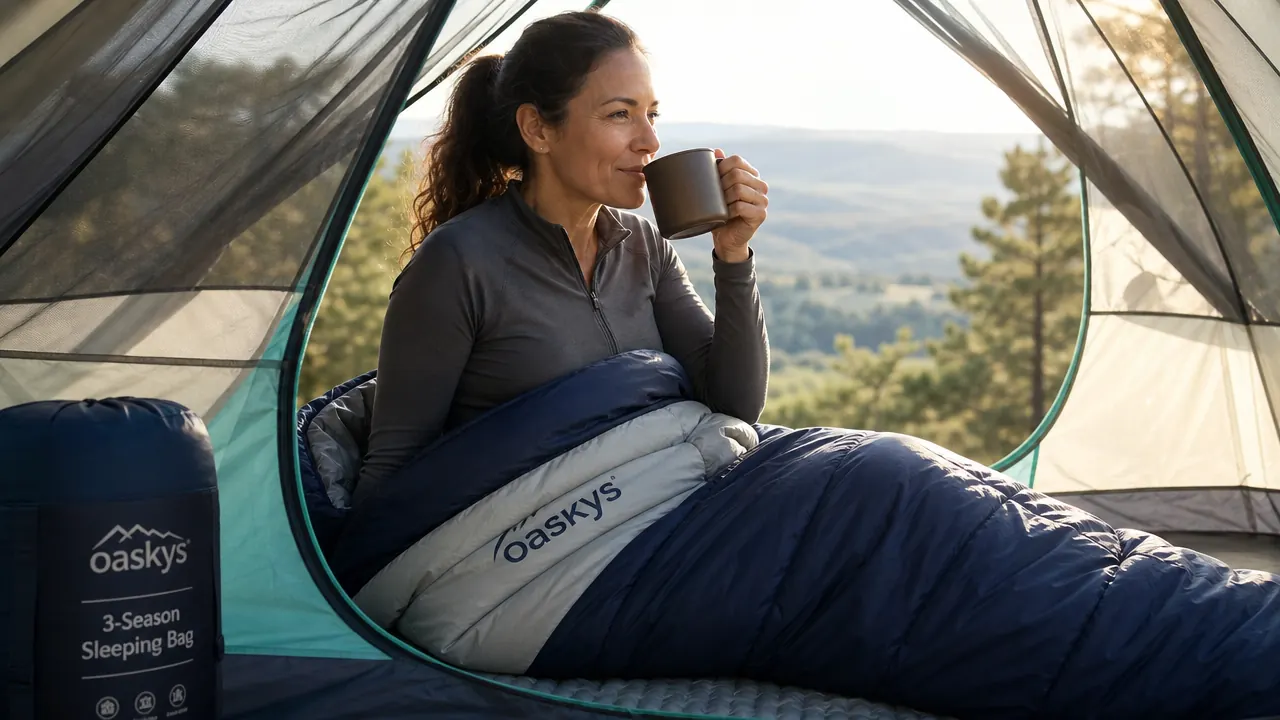
The mummy cut on the oaskys is well-executed for the price. The hood is a fitted oval that cinches via a single drawcord at the face opening. Pull it down to about a 4-inch circle around your face and the top of your head stays covered. On the nights that dipped toward the actual rating limit, that hood was the thing Marcus said made the biggest difference. Without it, the bag would have failed him earlier.
There is no separate draft collar, which is the insulated tube that sits at your shoulder line on higher-end mummy bags and prevents cold air from funneling in when you roll over. The oaskys relies entirely on the mummy taper to limit air intrusion at the shoulders. On calm, dry nights it is adequate. On nights with any wind and a temperature near the rating limit, you will feel cold air entering at the shoulder seam when you shift position. This is not unusual at this price, but it is worth knowing before you rely on it in shoulder-season conditions.
Who This Is For
The oaskys earns its 4.5-star average from car campers who use it in the right conditions. If your summer camping season runs from May to September, overnight lows in your area rarely crack below 48 degrees, and you are outfitting a family where not every bag needs to be premium, this bag does the job. It keeps a kid warm on a July night at a state park campground. It works as a camp cabin bag, a car-trip bag for adults who run warm, or a spare bag for a guest who shows up without gear.
It also works for adults who run warm in their sleep and tend to unzip bags anyway. If you are the person who wakes up sweating in a bag rated 10 degrees below the overnight temp, the oaskys may actually fit you better than its rating suggests, because you will naturally vent it before it builds up heat. Those people are a real segment of the camping population and the oaskys reviews from that group are mostly positive.
Who Should Skip It
Skip the oaskys if you camp in shoulder season, meaning April, early May, September, or October in most of the US. Night temps in those windows regularly hit the mid-30s and the bag will not keep a cold sleeper comfortable. You need a bag with a genuine 20-degree or 25-degree comfort rating, not a 35-degree survival floor. That costs more. It should cost more. A budget bag cannot responsibly insulate against late-October lows in the Appalachians.
Skip it for backpacking. The weight is wrong. You can find a 2.5 lb synthetic bag in the budget to mid range that is genuinely packable and has better fill distribution. At 3.5 lbs in a cinch sack, the oaskys belongs in a trunk, not on a back. And skip it if you are a cold sleeper camping with it solo without a liner or extra layers in the 35-to-42-degree range. You will be miserable and you will blame the bag, but the bag was never designed to be a comfortable 35-degree bag. It was designed to be a cheap 35-degree bag, and those are different things.
If you are in that shoulder-season zone and still want to make the oaskys work, read the how-to on staying warm below 40 degrees. There are specific adjustments, a fleece liner being the biggest one, that shift a 35-degree bag's effective comfort rating up by about 8 to 12 degrees. Combined with a proper sleeping pad with an R-value above 3, the oaskys can get you through a 38-degree night without waking up miserable. It just requires knowing what the bag actually is.
Right bag for the right nights: check today's price.
If your camping season stays above 45 degrees overnight, the oaskys delivers more than its price suggests. If you need shoulder-season performance, pair it with a fleece liner or step up to a warmer rating. Either way, current pricing is worth a look before your next trip.
Amazon Check Today's Price on Amazon →