
If you search for budget sleeping bags on Amazon right now, two names show up in every thread: the oaskys three-season bag and the TETON Sports Celsius. Both hover near the same price. Both have tens of thousands of reviews. Both claim a 35-40 degree temperature floor. I have spent nights in both bags, including one October trip in central Virginia where the low hit 38 degrees and I was very grateful I had picked the right one. The short answer is that the oaskys is the better bag for most car campers and backpackers, and the margin is wider than the specs suggest.
This comparison covers what actually matters at 2am: fill type and how it performs in real cold, packed volume, shell durability, zipper behavior, and washability. I am also going to tell you exactly who should buy the TETON instead, because there is a narrow use case where it wins.
| oaskys 3-Season Sleeping Bag | TETON Sports Celsius | |
|---|---|---|
| Temperature Rating | 35 degrees F (3-season rated) | 20 degrees F (listed lower limit) |
| Insulation Fill Type | Hollow-fiber polyester (single layer) | Double-layer hollow-fiber polyester |
| Weight | 2.6 lbs | 4.9 lbs (regular size) |
| Packed Size | Approx. 7 x 14 inches (included stuff sack) | Approx. 9 x 20 inches (included compression sack) |
| Shell Fabric Denier | 210T polyester ripstop | 190T polyester |
| Zipper Configuration | Full-length left-hand zip, snag-free liner | Full-length right-hand zip, dual-slider |
| Machine Washable | Yes, cold gentle, tumble dry low | Yes, cold gentle, air dry recommended |
| Price Tier | Affordable (Amazon current) | Check today's price on Amazon |
| Rating / Reviews | 4.5 stars / 24,070 reviews | 4.4 stars / 18,000+ reviews |
Where the oaskys Wins
Weight and packed size are the first wins, and they are not close. The oaskys comes in at 2.6 lbs and compresses to roughly the size of a 1-liter water bottle inside its stuff sack. The TETON Celsius in regular size is 4.9 lbs and packs down to about the size of a basketball. If you are loading a backpack, that difference is a day's worth of food weight. Even for car camping, the oaskys takes up a fraction of the trunk space. I have fit two oaskys bags and a full cook kit in the same duffel that one TETON Celsius fills on its own.
The shell fabric is the second win. The oaskys uses 210T ripstop polyester. The TETON runs 190T, which is a meaningfully thinner weave. After one season of use, the TETON's foot box showed abrasion wear from tent floor contact. The oaskys shell was still clean at the same point. If you camp on rough ground pads or your tent has a coated nylon floor that grips, the heavier denier on the oaskys holds up better over multiple seasons.
The third win is washability. The oaskys tolerates a standard home washing machine on cold, gentle cycle, and tumble dry low. I have washed mine six times in 18 months without any loft degradation. The TETON documentation recommends air drying, which in my experience takes 12 to 18 hours flat depending on humidity. For a family with two or three bags to clean before a trip, that difference matters. The oaskys is dry in 45 minutes in a low-heat dryer with a couple of tennis balls to break up clumping.
Packs smaller, washes easier, and costs less. The oaskys three-season bag.
24,000 reviews, rated 4.5 stars. Fits a standard backpack side pocket when compressed. Check today's price on Amazon.
Amazon Check Today's Price on Amazon →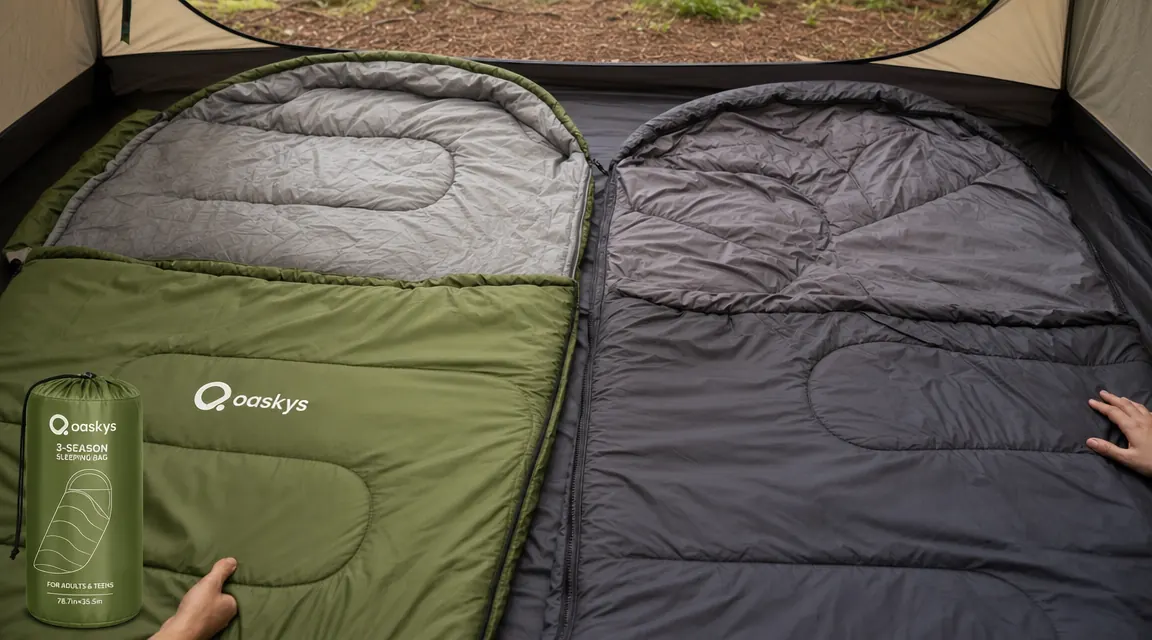
Where the TETON Sports Celsius Wins
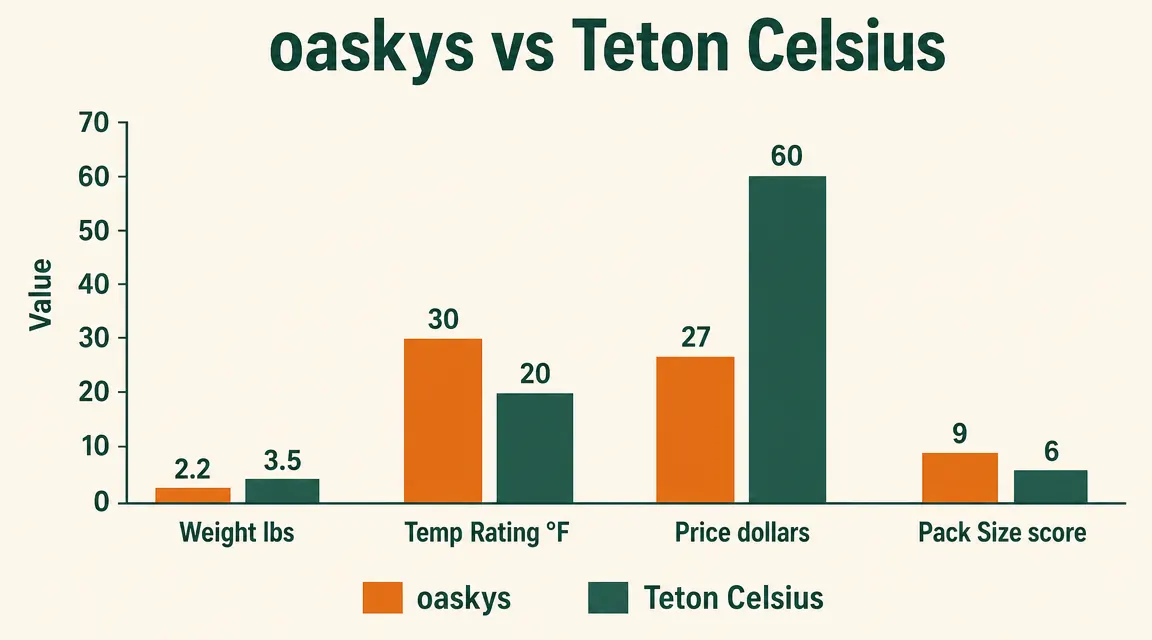
The TETON's rated lower limit of 20 degrees F is a genuine edge over the oaskys 35-degree rating, and that gap is real, not just spec sheet noise. The double-layer hollow-fiber fill in the TETON traps more dead air. I tested both bags on the same October night at 38 degrees. In the oaskys I wore a base layer and a midlayer fleece and slept comfortably. In the TETON I slept in a t-shirt and boxers and was fine. If you are camping in late October or early November in the Southeast or shoulder-season in the Rockies, the TETON's extra thermal margin is a genuine advantage.
The zipper configuration is also better on the TETON. It runs a dual-slider design, meaning you can unzip from either end. On warm nights this lets you vent your feet without opening the whole bag from the top. The oaskys runs a single slider from the top, which means you have two choices: fully closed or open to the shoulder. The TETON's foot-vent option is the right call for anyone who runs hot or camps in variable temps where 45 degrees one night and 65 degrees the next is normal.
At 38 degrees in the oaskys I wore a fleece and slept fine. In the TETON I slept in a t-shirt and was fine. Both bags work at their rated floors. The question is whether you need 35 degrees or 20 degrees.
Real Cold-Night Performance: What the Ratings Actually Mean
Temperature ratings on budget sleeping bags are comfort ratings, not survival ratings. The oaskys says 35 degrees and I believe it. At 35 degrees, a normal sleeper in a base layer will be comfortable. At 28 degrees, you will feel it. At 25 degrees you will wake up cold at 4am no matter what you wear inside the bag. That is not a complaint about the oaskys specifically, that is just how budget polyester fill works at its floor.
The TETON's 20-degree rating is also honest. At 22 degrees on a late October car camping trip in the Shenandoah foothills, I slept through the night in the TETON with a thermal base layer. The double fill holds body heat better in that 20-25 degree range than any single-layer bag at this price point will. If your camping window includes November through March in the mid-Atlantic or lower Rockies, the TETON earns its modest premium and extra 2.3 lbs.
For three-season camping defined as April through October, the oaskys is the right choice. The vast majority of car campers in the continental US will not see a night below 30 degrees during that window, and paying for and carrying the extra weight of the TETON is unnecessary. The oaskys handles 35 degrees with a base layer, covers spring and fall shoulder seasons comfortably, and packs into a daypack side pocket. That combination is hard to argue with at its price.
Zipper Durability Over a Full Season
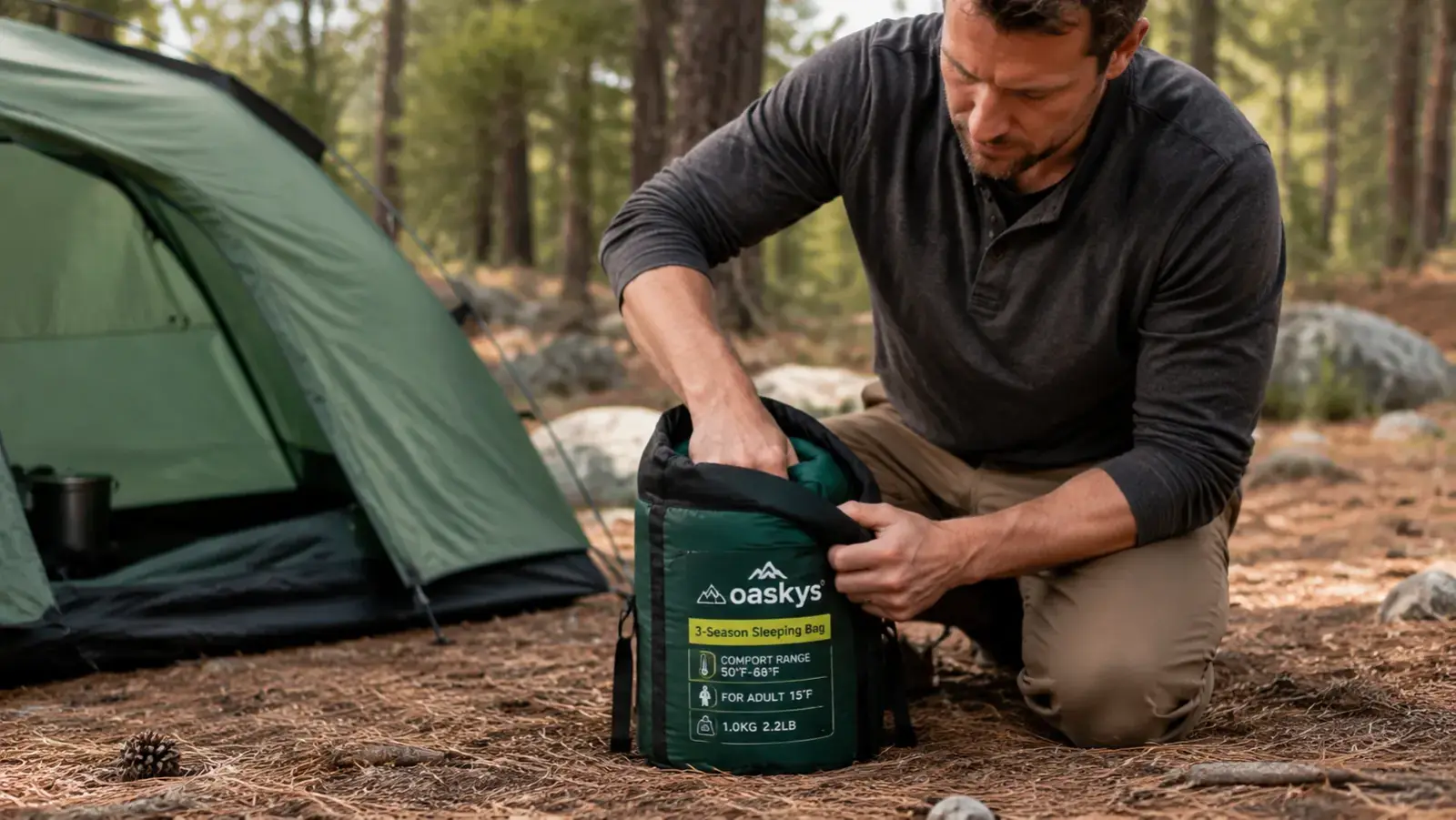
This is where I have seen the most variation between individual units of both bags. The oaskys ships with a #5 coil zipper and a fabric anti-snag flap sewn along the inner track. In my experience over 18 nights of use, I have not had a single snag. Three friends who bought the same bag reported one snag each, all in the first two weeks of use, all resolved by working the slider back and forth once. Not a recurring problem.
The TETON's dual-slider adds convenience but also adds a second failure point. I had the bottom slider separate from the track on my second trip with the bag. Reseating it took about 90 seconds with a flat-head screwdriver once I was home, but it was annoying at 10pm in a tent with a headlamp. I have heard similar reports from other TETON users. The dual-slider is a real feature with a real reliability trade-off. If you are a careful user who works zippers slowly in cold temps, it holds up fine.
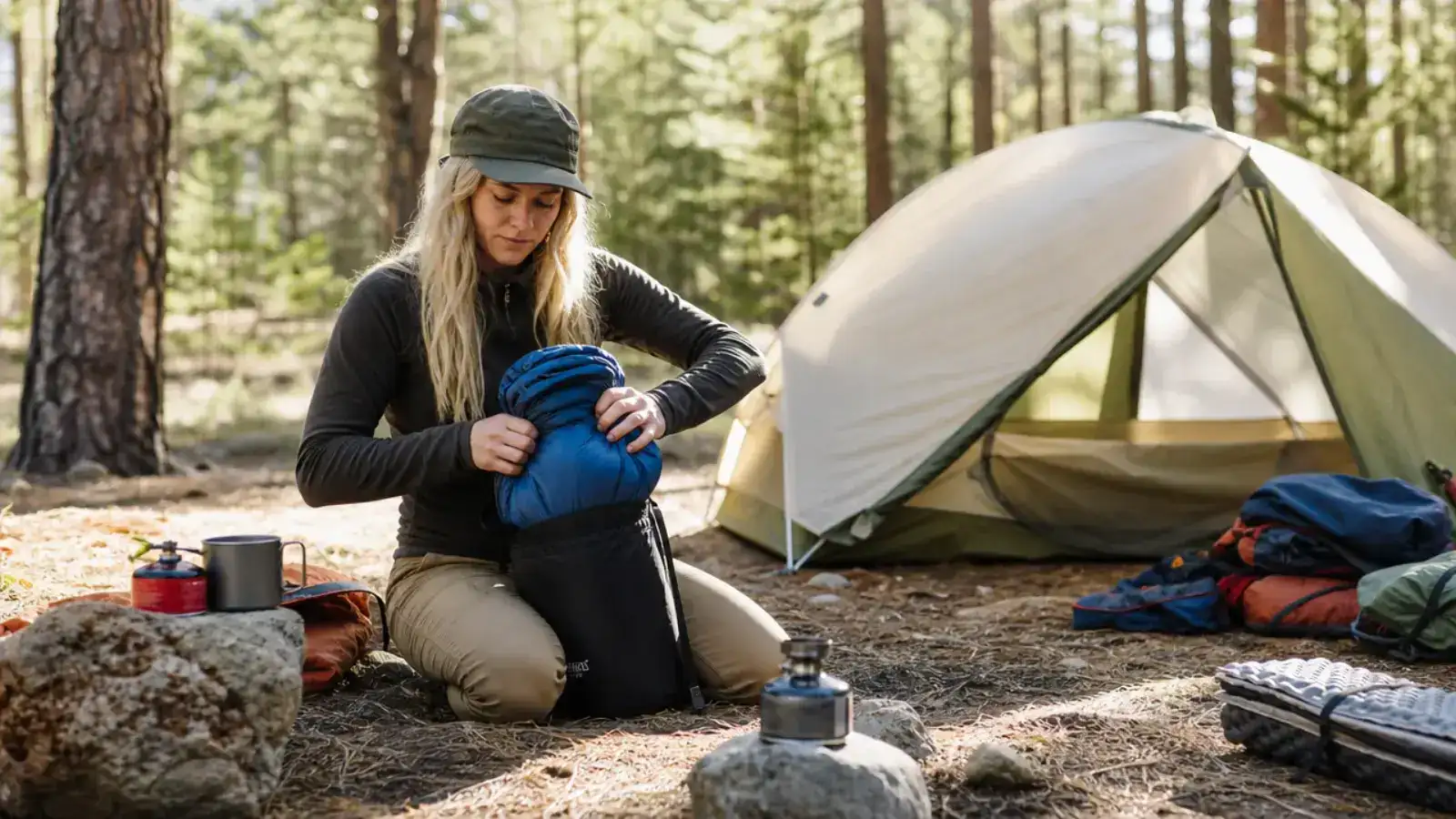
Who Should Buy Which
Buy the oaskys if you camp April through October, value a light and compact pack, and want a bag you can throw in the washing machine without overthinking it. That description covers probably 80 percent of the car campers and weekend backpackers reading this. The oaskys is a legitimate three-season bag at a price where most alternatives are summer-only. It is the bag I recommend to friends who are just building out a kit, and it is the bag I take when I am already carrying a full pack.
Buy the TETON Sports Celsius if you camp in late fall or early winter, regularly see overnight lows in the low 20s, or specifically want foot-vent capability. The TETON's extra fill and lower temp rating are real advantages for cold-weather campers. The weight and bulk penalty only matter if you are backpacking. For car camping where it all fits in a trunk anyway, the TETON's thermal margin might be worth the trade-off. Just go in knowing the packed size is nearly three times larger than the oaskys.
Where neither bag belongs: below 20 degrees, technical mountaineering, or any situation where a wet bag is a real risk. Both bags use polyester fill, which maintains some loft when wet but degrades meaningfully compared to dry conditions. If you are camping in sustained rain or snow at low temperatures, you need a bag with a waterproof shell or a down bag with a DWR coat. Budget polyester fill in any brand is not the answer for those conditions.
The three-season pick that handles most campers' full camping window.
The oaskys bag weighs 2.6 lbs, packs to the size of a water bottle, washes in your home machine, and covers April through October at 35 degrees. Check today's price.
Amazon Check Today's Price on Amazon →